
Reducing export costs is achievable by selecting the right shipment methods, optimizing supply-chain planning, and using maritime transport efficiently. Proper packaging design, choosing the optimal route, and managing customs-related expenses can significantly lower total export costs.
However, many exporters focus only on freight rates and overlook important factors such as container type, scheduling, and documentation management. These often lead to hidden expenses. Below, we explain the most practical methods of reducing export costs in detail.
Why Is Cost Management Important in Exporting?
Exporting is one of the most effective ways for producers and trading companies to expand their market reach. But without proper cost control, profitability decreases.
Export-related expenses go far beyond the cost of transportation. It includes several operational and administrative elements that must be managed systematically.
Key export cost components:
• International transportation
• Packaging and cargo preparation
• Customs fees
• Cargo insurance
• Warehousing and logistics
Effective management of these components allows exporters to offer competitive pricing in global markets.
How Maritime Transport Helps Reduce Export Costs
Maritime transport is one of the most economical international freight options, especially for large-volume and heavy cargo.
Compared to other transport modes, sea freight is usually cheaper and allows shipping a high volume of goods in one load.
Key advantages of maritime transport:
• Lower cost than air freight
• Suitable for high-volume cargo
• Ideal for heavy or oversized goods
• Access to numerous international ports
This is why many exporters prefer maritime shipping to reduce export costs.
Choosing the Right Container Type
The container type directly influences shipping costs. Choosing the wrong container can increase expenses or even damage the goods.
Containers are designed for specific categories of cargo, and selecting the right one is essential.
Common container types used in exports:
• Standard container
• Reefer container
• Open-top container
• Tank container
For instance, perishable goods must be shipped in reefer containers, while industrial goods usually fit standard containers.
Choosing the correct container type is a critical factor in export cost reduction.
Planning the Shipping Schedule
Timing is crucial when exporting. Shipping goods at the right time minimizes freight and storage expenses.
Exporters often rush shipping due to poor planning and end up using faster, more expensive methods.
To prevent this:
• Schedule production and cargo preparation in advance
• Reserve vessel space early
• Prepare export documentation ahead of time
Proper scheduling eliminates unnecessary costs.

Packaging Optimization to Reduce Costs
Packaging affects the overall shipping cost more than many exporters realize. Poorly designed packaging occupies unnecessary space in a container.
This increases freight charges.
Key packaging considerations:
• Compact, standardized packaging
• Eliminating empty space inside boxes
• Using durable but lightweight materials
Well-planned packaging is one of the simplest ways to reduce export costs.
The Role of Documentation in Export Expenses
Documentation errors often lead to clearance delays—resulting in storage penalties or extra handling fees.
Important export documents include:
• Commercial invoice
• Packing list
• Certificate of origin
• Bill of lading
Accurate documentation prevents delays and avoids extra expenses.
Comparison of Key Factors Affecting Export Costs
Factor | Impact on Export | Cost-Reduction Method
Transport | Highest cost segment | Choosing the right route and mode
Packaging | Increases cargo volume | Standardized, compact packaging
Documentation | Clearance delays | Accurate document preparation
Scheduling | Higher urgent-shipment costs | Early planning
Cargo Insurance | Higher risk = higher premiums | Selecting suitable coverage
These combined factors shape the overall export cost structure.
Choosing the Right Shipping Route
The shipping route greatly influences freight costs. A shorter or more efficient route can reduce expenses.
Sometimes multimodal transport (sea + land) can be more cost-effective.
Route selection considerations:
• Distance between ports
• Infrastructure quality
• Transit time
• Port charges
Evaluating these factors helps exporters find the most economical route.
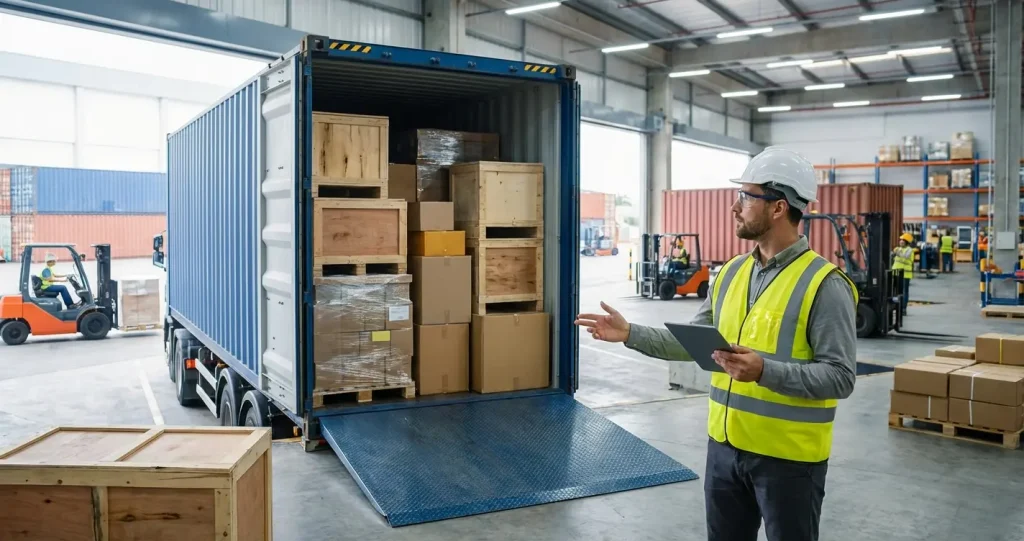
Using Consolidated Cargo (Groupage)
Consolidation is a cost-saving method for exporters with low-volume shipments. Multiple small shipments share a single container.
This method offers:
• Lower freight costs
• Efficient space utilization
• Feasibility for small exporters
This is commonly known as groupage.
Read more : 9 Key Driver Safety Tips | Essential Rules for Safe Road Transport
Additional Notes on Reducing Export Costs
Reducing export costs is not limited to choosing a transportation mode. It requires smart decisions across the entire export chain.
Key points exporters should consider:
• Proper scheduling
• Optimized packaging
• Accurate documentation
• Efficient route selection
• Effective logistics planning
Exporters who focus on cost management can offer more competitive prices and gain a stronger position in global markets.

