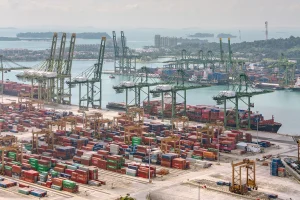
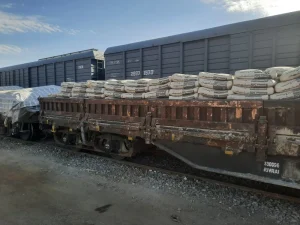
Sulfur transportation, as one of the most widely used mineral and chemical materials across various industries, involves specific export requirements that must be carefully addressed. Failure to comply with these requirements may lead to cargo detention, increased operational costs, and potential safety risks. At export ports, sulfur is subject to defined regulations governing handling, storage, and loading due to its physical and chemical characteristics. Compliance with these regulations is essential for all stakeholders within the logistics chain.
In recent years, export ports have enforced stricter controls on sulfur transportation. Port inspections, safety standards, and environmental compliance measures now play a more significant role in cargo acceptance procedures. For exporters and international transport companies, a thorough understanding of these regulatory and operational requirements has become a critical component of effective export management.

The Nature of Sulfur and Its Impact on the Transportation Process
Sulfur is exported in various forms, including lump, granular, and powder, and each form involves different transportation requirements. Flammability, dust generation, and sensitivity to environmental conditions are among the factors that make sulfur transportation at export ports a process requiring careful management. These characteristics directly influence packaging methods, loading procedures, and the selection of appropriate port handling equipment.
In sulfur transportation, the physical presentation of the cargo determines the level of safety and technical controls required at the port. For this reason, the technical specifications of the shipment must be accurately declared in transport documents and export declarations to prevent discrepancies during the cargo acceptance process.
Safety Requirements in Sulfur Transportation at Export Ports
One of the most critical aspects of sulfur transportation at export ports is compliance with safety requirements. Ports typically enforce specific regulations to prevent leakage, dust dispersion, and exposure of sulfur to heat sources. These requirements include the use of appropriate loading equipment, controlled temporary storage conditions, and maintaining safe separation distances from other cargo.
Failure to comply with safety requirements may result in suspension of port operations or restrictions imposed on the exporter. Therefore, logistics companies are required to review and implement all relevant sulfur transportation safety standards before the cargo enters the port area.
Packaging and Loading Procedures for Export Sulfur
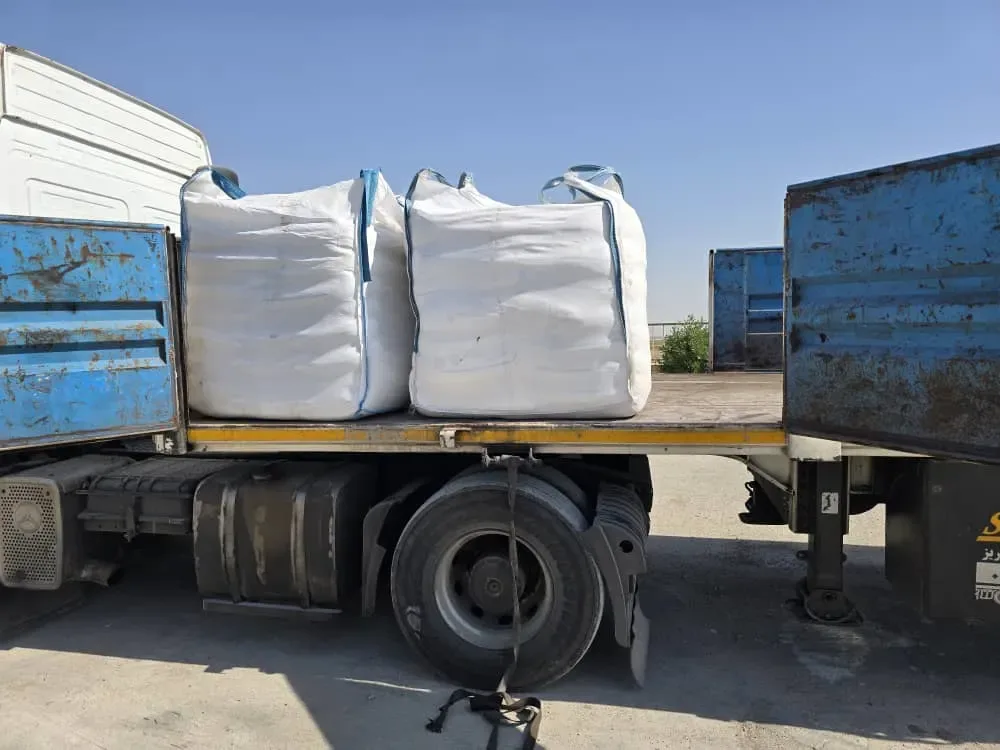
Proper packaging is one of the key factors in the success of sulfur transportation. At export ports, the type of packaging must be selected according to the physical form of sulfur and the specific transport conditions. Inadequate packaging may result in port contamination, cargo loss, or rejection of the shipment during inspection procedures.
Loading operations must also comply with port regulations and be carried out using approved equipment. In many export ports, the use of specialized handling equipment is mandatory to minimize dust dispersion during loading. These operations are often conducted under direct supervision to ensure full compliance with safety and environmental standards.
Documentation Requirements and Port Regulations
Sulfur transportation at export ports cannot proceed without complete and accurate documentation. Transport documents, certificates related to the nature of the cargo, and safety compliance records are among the essential documents reviewed prior to cargo acceptance. Any discrepancies or incomplete documentation may lead to operational delays or even refusal of loading authorization.
Although port regulations may vary between countries, transparency and consistency between declared information and the actual cargo specifications remain fundamental requirements. For this reason, close coordination between the exporter, the transport company, and port authorities plays a crucial role in minimizing operational risks and ensuring a smooth export process.
The Role of Logistics Companies in Managing Sulfur Transportation Requirements
International logistics companies play a critical role in managing sulfur transportation requirements at export ports. With a thorough understanding of port regulations, safety standards, and operational procedures, these companies are able to plan and coordinate transport activities in a way that minimizes disruptions and operational delays.
Practical experience in sulfur transportation and familiarity with port-related restrictions enable logistics providers to anticipate potential risks and manage time and cost efficiently. For this reason, cooperation with specialized logistics companies is considered a key success factor in sulfur export operations.
Sulfur Storage at Ports and Operational Limitations
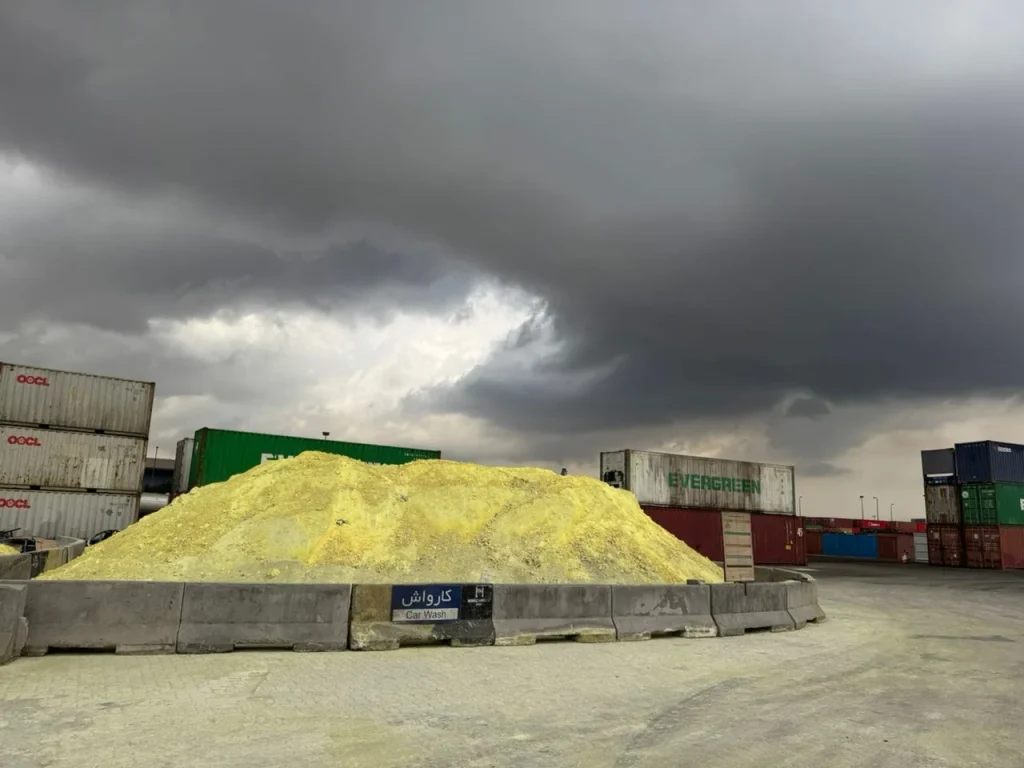
Within the export process, sulfur storage at ports represents one of the most sensitive stages of sulfur transportation. Many export ports impose specific restrictions regarding storage location, permitted storage duration, and safe separation distances from other cargo. These limitations are designed to reduce safety and environmental risks associated with sulfur handling.
If sulfur transportation is not properly scheduled, delays in loading operations or limited port storage capacity may result in additional costs for the exporter. Effective planning of cargo arrival times and close coordination with port operators are essential to minimizing the risks associated with sulfur storage at export terminals.

Risk Management in Sulfur Transportation from Port to Final Destination
Risk management in sulfur transportation is not limited to port operations; it must encompass the entire export route, from the cargo’s arrival at the port to its delivery at the final destination. Identifying high-risk factors such as adverse weather conditions, operational delays, regulatory changes, or unexpected port restrictions constitutes a critical component of logistics planning in sulfur export operations. In this context, applying standardized frameworks and internationally recognized procedures plays a significant role in mitigating operational risks.
Experienced logistics companies typically manage sulfur transportation risks by developing alternative scenarios, selecting appropriate routes, and maintaining continuous coordination with port authorities and operational stakeholders. The application of standards issued by international logistics organizations, including guidelines and documentation approved by FIATA, contributes to greater consistency in transport procedures and enhances reliability across the export supply chain. As discussed in the article Getting to Know FIATA and Its History, this international federation plays a vital role in reducing disputes and increasing transparency in international transportation through process standardization.
Cargo Monitoring and Quality Control During Sulfur Transportation
Following the identification and management of route-related risks, continuous cargo monitoring becomes one of the most essential requirements in sulfur transportation. Quality control throughout the transport process—particularly during port handling and transfer to subsequent transport modes—plays a crucial role in preserving cargo integrity and preventing damage. Factors such as humidity levels, temporary storage conditions, and handling methods may directly affect the physical properties of sulfur.
At export ports, cargo monitoring is typically conducted through periodic inspections, evaluation of packaging conditions, and verification that the physical characteristics of the cargo correspond with the declared transport documentation. Any abnormal variation in cargo condition may indicate an emerging operational risk requiring immediate corrective action. Implementing systematic monitoring procedures at this stage helps minimize commercial disputes, prevent quality degradation, and strengthen confidence across the transportation chain.
Conclusion
Sulfur transportation requirements at export ports demonstrate that this process extends far beyond the mere movement of cargo. It requires strict compliance with safety regulations, documentation standards, and port operational requirements. A thorough understanding of these obligations and their proper management plays a decisive role in risk reduction, preventing delays, and ensuring a stable and reliable sulfur export flow.