
Road transport is one of the most common ways of moving goods and passengers around the world. Using land vehicles such as trucks, trailers, and cars, this mode of transportation plays a crucial role in supply chains due to its accessibility and flexibility.
However, understanding only the definition is not enough. Many people don’t know what the real applications of road transport are, what advantages it offers over other modes, and in which situations limitations may appear. Let’s explore road transport in full detail.
What Is Road Transport?
Road transport refers to the movement of goods or passengers through a network of roads using motor vehicles such as trucks, vans, trailers, or buses.
It is one of the oldest and most widely used forms of land transportation and represents a vital part of global trade. Even when goods are moved by sea or air, road transport is often used at the beginning or end of the journey.
In short, roads act as the connecting link between ports, airports, warehouses, and production centers.
The Role of Road Transport in the Supply Chain
Within logistics systems, road transport serves as the main connector between producers, distributors, and consumers. It allows the direct and timely movement of goods from the source to the final destination.
Therefore, in modern supply chain management, road transport complements other modes of freight movement.
Main functions include:
- Moving goods from factories to warehouses
- Hauling goods from ports to distribution centers
- City-level distribution to retailers
- Transporting small consignments
- Linking other modes, such as rail or sea freight
Main Applications of Road Transport
The flexibility and reach of road transport make it a key component in multiple industries and economic sectors.
1. Industrial Goods Transportation
Factories rely on trucks and vans to carry raw materials and finished products between cities and regions.
2. Domestic Distribution
Retail and wholesale systems depend heavily on delivery trucks and vans for city-level and regional distribution.
3. Agricultural Products
Farmers use road transport to deliver fresh produce to markets and food processing centers.
4. International Road Freight
In many regions, goods cross borders via trucks and trailers, enabling international road transportation.
5. Small Cargo and Parcel Delivery
Low-volume or lightweight goods are often moved via small trucks or commercial vans.
Types of Vehicles Used in Road Transport
Different types of vehicles are used depending on the cargo type, distance, and route conditions.
| Vehicle Type | Main Use | Approximate Capacity |
|---|---|---|
| Light Truck | Urban deliveries | 3–6 tons |
| Heavy Truck | Intercity transport | 10–15 tons |
| Trailer | Heavy/large cargo | 20–25 tons |
| Pickup Van | City distribution | <2 tons |
Choosing the right vehicle directly affects cost, time, and cargo safety in road transport operations.
Key Advantages of Road Transport
The widespread use of road transport results from its multiple benefits compared to other modes.
Wide Accessibility
Roads extend almost everywhere, allowing goods to reach even remote destinations.
Route Flexibility
Drivers can alter routes or schedules easily, increasing operational flexibility.
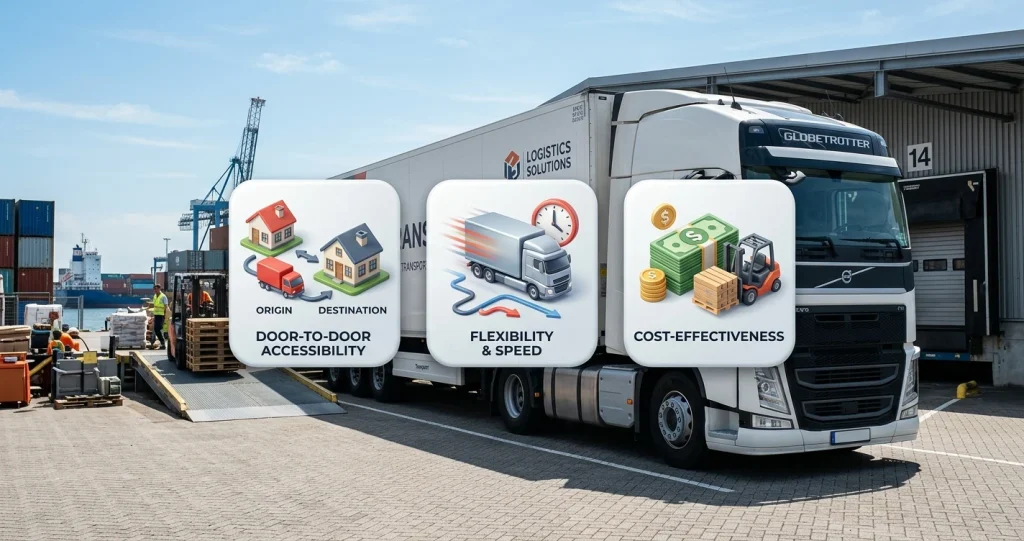
Door-to-Door Delivery
Unlike rail or sea transport, road freight provides direct delivery from origin to destination.
Best for Short to Medium Distances
For shorter routes, road freight is often faster and more economical.
Ideal for Small Loads
Small or fragmented shipments can be delivered efficiently by light trucks and vans.
Disadvantages of Road Transport
Despite the benefits, road transport also has certain drawbacks that must be considered.
Limited Capacity
Compared to ships or trains, trucks have lower capacity, often requiring multiple trips for large shipments.
Dependence on Road Conditions
Traffic, road quality, and infrastructure strongly affect delivery time and reliability.
High Fuel Consumption
Heavy vehicles consume considerable fuel, raising transport costs.
Weather Sensitivity
Rain, snow, or fog may delay road transport operations.
Safety Risks
Road accidents represent one of the biggest challenges in this sector.
Road Transport Compared to Other Modes
| Mode of Transport | Speed | Cost | Capacity |
|---|---|---|---|
| Road | Medium | Medium | Medium |
| Sea | Low | Very Low | Very High |
| Air | Very High | Very High | Low |
| Rail | Medium | Low | High |
As shown, road transport offers the best mix of accessibility, flexibility, and cost-efficiency for many logistics needs.
Factors Affecting the Cost of Road Transport
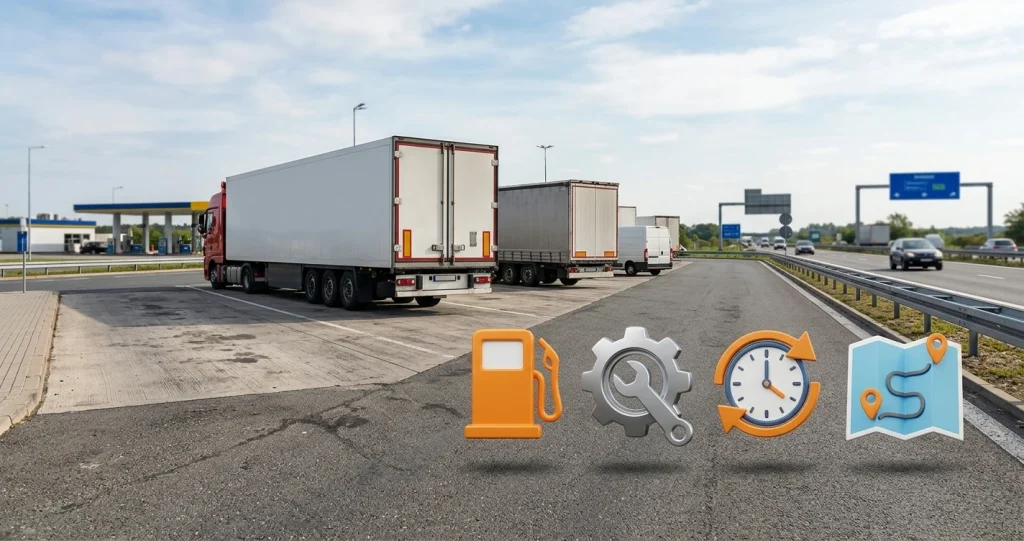
The cost of road freight depends on several operational and environmental variables:
- Distance between origin and destination
- Type, weight, and value of goods
- Type of vehicle used
- Fuel prices
- Road tolls and taxes
- Weather and traffic conditions
Managing these factors helps companies optimize transport expenses.
Tips for More Efficient Road Transport
To improve efficiency and safety in road transport, consider these best practices:
- Choose the right vehicle for the cargo type
- Use proper packaging and securing methods
- Plan the route and timing carefully
- Check road and weather conditions in advance
- Optimize scheduling to avoid congestion
Following these tips enhances cargo safety and ensures timely delivery.
Read more : 7 Ways to Reduce Export Costs | Effective Maritime Transport Strategies
Final Thoughts on Road Transport
Road transport remains a central pillar of the global logistics network. It offers unmatched flexibility, direct delivery, and broad coverage — making it essential for trade and economic growth.
Still, factors such as limited capacity, high fuel use, and traffic-related risks should be accounted for when planning transportation strategies. Understanding its uses, advantages, and disadvantages helps businesses select the most efficient solution for their supply chain.

